

Embroidery Apparel: Start with These 3 Quick Checks
- 日期:2026-03-09
- 分類:服務
Embroidery Apparel: Start with These 3 Quick Checks
Embroidery apparel refers to clothing decorated with stitched designs, logos, or artwork using embroidery techniques. This method is widely used for corporate uniforms, fashion garments, promotional clothing, and branded merchandise because it offers durability and a premium appearance.
Before producing embroidery apparel, it is important to evaluate several factors to ensure high-quality results and efficient production.
- Check fabric compatibility: Different fabrics react differently to embroidery stitching.
- Review design complexity: Detailed logos or artwork may require adjustments for embroidery.
- Confirm production capacity: The manufacturer should have suitable embroidery equipment and experience.
Understanding these basic considerations can help brands and businesses produce embroidery apparel that looks professional and lasts longer.
Common Types of Embroidery Apparel
Embroidery can be applied to many different types of garments across fashion, corporate, and promotional industries.
| Apparel Type | Common Fabric | Typical Use |
|---|---|---|
| Polo shirts | Cotton or polyester blend | Corporate uniforms |
| Hoodies and sweatshirts | Fleece or cotton | Streetwear and branding |
| Caps and hats | Cotton twill or polyester | Promotional merchandise |
| Jackets | Nylon, polyester, or denim | Brand apparel |
| Work uniforms | Durable blended fabrics | Industrial or service use |
Embroidery Apparel Production Workflow
Step 1: Design preparation
The artwork or logo must first be converted into an embroidery file format through digitization.
Step 2: Fabric and garment selection
Selecting suitable garments ensures the embroidery stitches will hold properly and maintain quality.
Step 3: Sampling and testing
A sample is produced to verify stitching quality, design placement, and color accuracy.
Step 4: Embroidery production
Industrial embroidery machines stitch the design onto garments during mass production.
Step 5: Quality inspection
Each garment is inspected to ensure stitching consistency and proper design placement.
Step 6: Packaging and delivery
Finished embroidery apparel is packaged and prepared for shipment to retailers or clients.
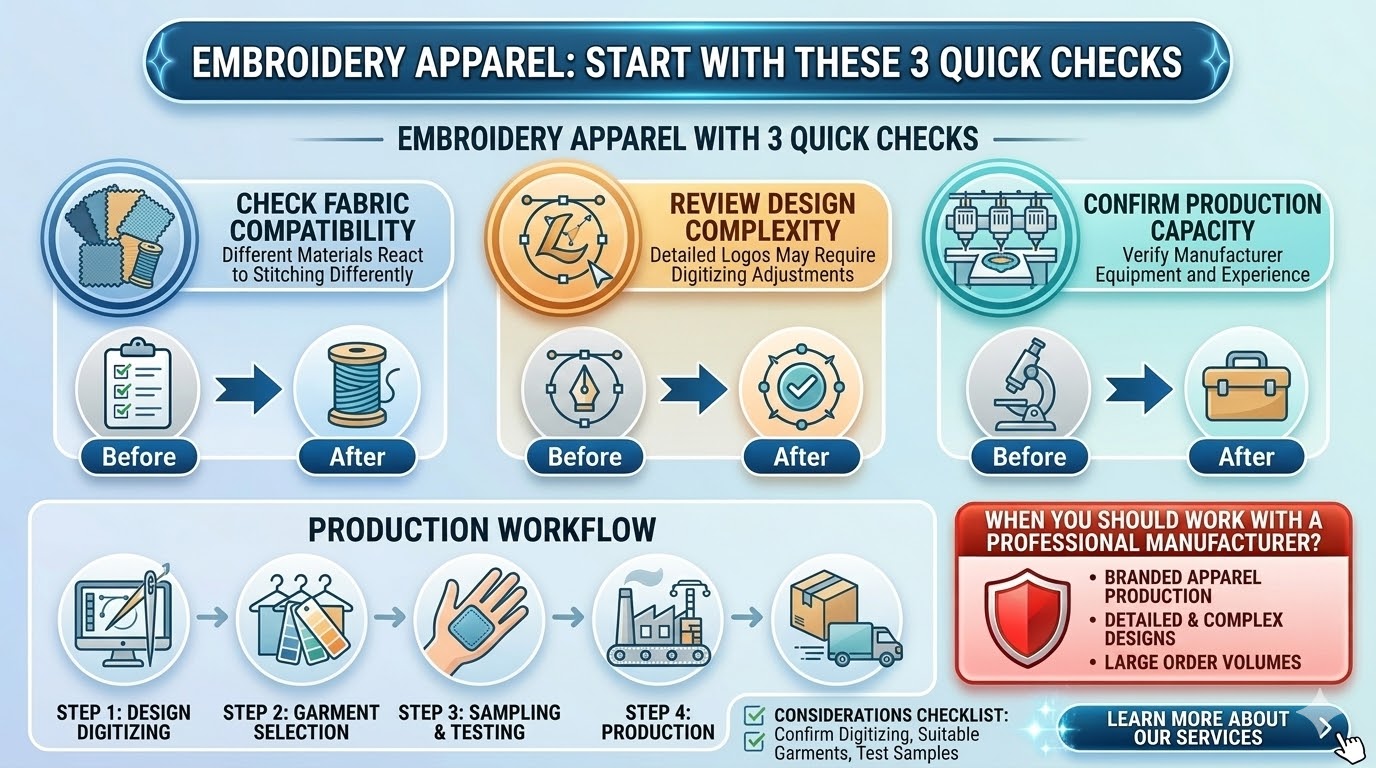
When You Should Work with a Professional Embroidery Manufacturer
Working with experienced embroidery manufacturers can help avoid production issues and improve product quality.
- When producing branded apparel for businesses
- When embroidery designs are detailed or complex
- When producing large order volumes
- When consistency and durability are required
- When working with premium garments or fabrics
Professional manufacturers typically have advanced embroidery machines and experienced technicians to ensure consistent results.
Important Considerations for Embroidery Apparel
- Ensure the embroidery design is properly digitized
- Select garments suitable for embroidery stitching
- Confirm thread quality and color consistency
- Review embroidery placement before production
- Test samples before large-scale production
Careful planning and coordination between designers and manufacturers can significantly improve the final embroidery apparel product.
FAQ
What is embroidery apparel?
Embroidery apparel refers to clothing decorated with stitched logos, designs, or text.
Why choose embroidery over printing?
Embroidery is more durable and often provides a premium appearance.
What fabrics work best for embroidery?
Cotton, polyester blends, fleece, and denim are commonly used fabrics.
How long does embroidery production take?
Production time depends on order quantity, design complexity, and manufacturing capacity.
Can embroidery be applied to any clothing?
Most garments can be embroidered, but some delicate fabrics may require special techniques.
What is embroidery digitizing?
Digitizing converts artwork into a stitch file readable by embroidery machines.
Is embroidery suitable for logos?
Yes, embroidery is widely used for corporate logos and branding.
How durable is embroidery on clothing?
Embroidery is generally very durable and can withstand repeated washing.
What industries use embroidery apparel?
Industries include corporate uniforms, fashion brands, sports teams, and promotional merchandise.
How do brands choose an embroidery manufacturer?
Brands often evaluate experience, equipment, sample quality, and production capacity.