

What Is Sublimation Printing? Process, Materials, and Applications
- 日期:2026-03-09
- 分類:工業工程
What Is Sublimation Printing?
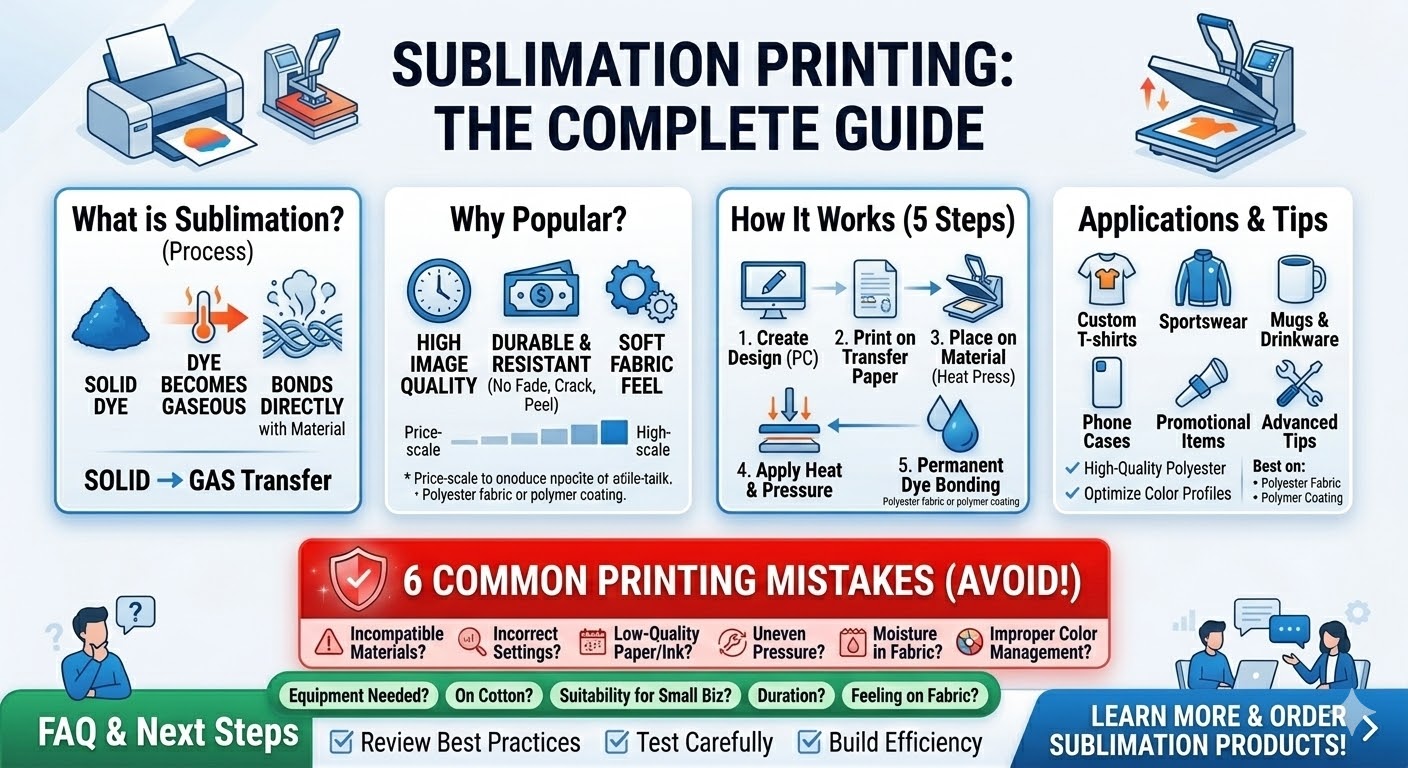
Sublimation printing is a heat-transfer printing technique that uses specialized inks and heat to embed dye directly into materials. Unlike traditional printing methods where ink sits on top of the surface, sublimation printing allows the dye to become part of the material itself.
The term “sublimation” refers to the physical process where a solid turns directly into gas without becoming liquid first. During printing, sublimation dye is heated until it transforms into gas, which then bonds with the fibers or polymer coating of the substrate.
This process produces high-resolution images and vibrant colors, making sublimation printing ideal for products such as:
- Custom T-shirts and apparel
- Sportswear and jerseys
- Mugs and drinkware
- Phone cases
- Promotional merchandise
Because the dye becomes embedded in the material, sublimation prints are known for their durability and smooth finish.
Why Is Sublimation Printing Popular?
Sublimation printing has become widely used in custom product manufacturing and personalized merchandise because of its ability to produce vibrant, long-lasting designs.
High Image Quality
Sublimation printing can reproduce detailed images and full-color graphics with smooth gradients.
Durable Prints
Because the dye becomes part of the material, the print does not easily crack, peel, or fade.
Soft Fabric Feel
On fabric products, sublimation printing maintains the original texture of the material since no thick ink layer is applied.
How Sublimation Printing Works (5 Steps)
The sublimation printing process typically involves several key steps from digital design to heat transfer.
- Create a digital design
- Print the design using sublimation ink on transfer paper
- Place the printed paper on the target material
- Apply heat and pressure using a heat press
- The dye sublimates and bonds with the material surface
| Stage | Description |
|---|---|
| Design Preparation | Create artwork using graphic software |
| Printing | Print the image onto transfer paper |
| Heat Transfer | Use a heat press to transfer the design |
| Final Product | The dye bonds permanently with the material |
Common Sublimation Printing Mistakes
- Using materials that are not compatible with sublimation
- Incorrect heat press temperature or time settings
- Low-quality transfer paper or ink
- Improper color management in design files
- Uneven pressure during heat transfer
- Moisture in fabric before pressing
Advanced Tips for Sublimation Printing
Use High-Quality Polyester Materials
Sublimation printing works best on polyester fabrics or polymer-coated surfaces because the dye bonds effectively with these materials.
Optimize Color Profiles
Using the correct color profiles can help ensure accurate color reproduction during the printing process.
Control Heat and Pressure
Proper heat press settings are critical to achieving consistent results and avoiding ghosting or uneven prints.
Conclusion & Next Steps
Sublimation printing is a versatile digital printing method widely used for producing custom products, apparel, and promotional merchandise. By embedding dye directly into materials, the process creates vibrant, durable prints with a smooth finish.
For businesses and creators interested in custom product manufacturing, understanding the sublimation printing process, materials, and best practices can help improve print quality and production efficiency.
FAQ
What is sublimation printing?
Sublimation printing is a heat transfer printing method that embeds dye into materials using heat and pressure.
What materials work best for sublimation printing?
Polyester fabrics and polymer-coated surfaces are typically used for sublimation printing.
Is sublimation printing durable?
Yes, sublimation prints are known for their durability and resistance to fading or cracking.
Can sublimation printing be used on cotton?
Sublimation printing generally works best on polyester materials rather than cotton.
What equipment is required for sublimation printing?
Common equipment includes a sublimation printer, sublimation ink, transfer paper, and a heat press.
What products can be made with sublimation printing?
Common products include apparel, mugs, promotional items, and custom accessories.
Is sublimation printing suitable for small businesses?
Yes, many small businesses use sublimation printing for custom merchandise production.
How long does sublimation printing last?
Because the dye bonds with the material, sublimation prints can last for a long time with proper care.
Does sublimation printing feel different on fabric?
Sublimation printing usually maintains the original softness of the fabric.
Is sublimation printing environmentally friendly?
Compared with some traditional methods, sublimation printing can produce less waste and does not require large amounts of water.